

Choosing beautiful porcelain or ceramic tile is only half the equation. The quality of the installation determines how those floors look, feel, and perform for years to come. Even expensive tile can look disappointing when grout lines are uneven, tile edges don’t align, or transitions between rooms are poorly finished.
For Las Vegas homeowners comparing tile flooring options, it’s worth looking beyond color, price, and material. The details that are easiest to overlook during the selection process are often the ones you’ll notice every day once your floors are installed.
Whether you’re replacing kitchen tile, renovating a bathroom, or installing porcelain flooring throughout your home, here’s what separates a good tile installation from a great one.
In this article, we cover:

How to Get the Best Results From Your Tile Flooring Installation
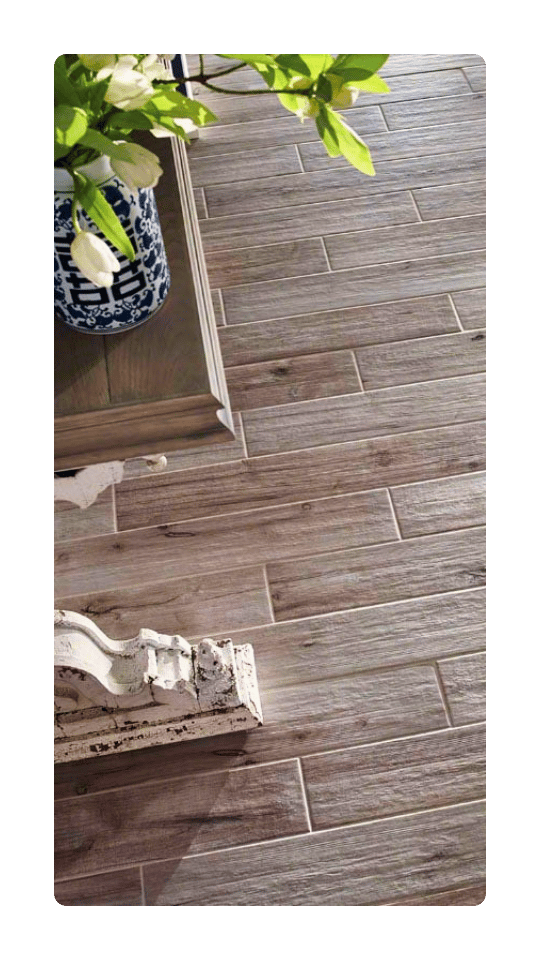
Getting beautiful, long-lasting tile floors starts with choosing the right tile for your space and making sure the installation is properly planned. Whether you’re installing porcelain or ceramic tile in a kitchen, bathroom, or throughout your Las Vegas home, a few important details can make a noticeable difference in the finished result.
Start with the condition of your existing floors. Many Las Vegas homes have concrete foundations, and uneven surfaces or existing cracks may require preparation before tile installation begins. This is especially important with large-format porcelain tile, where imperfections in the subfloor can lead to uneven tile edges.
Consider the layout, grout lines, and transitions before installation. Tile placement should complement the room’s dimensions, with thoughtfully positioned cuts and consistent grout joints. Pay particular attention to areas where tile meets sliding glass doors, staircases, or other flooring materials, as these finishing details can affect both appearance and functionality.
Finally, work with installers who understand the requirements of your specific tile. Proper surface preparation, installation methods, and attention to detail help ensure your new floors look cohesive and perform as intended.
How Tile Layout Affects the Finished Look of Your Floors
One detail homeowners often overlook is where the tile pattern begins and ends. For example, centering a tile layout around a kitchen island or main entryway may create a more balanced appearance than starting against the nearest wall. In larger Las Vegas homes with connected living spaces, installers also need to consider whether the pattern should continue through doorways or change direction between rooms.
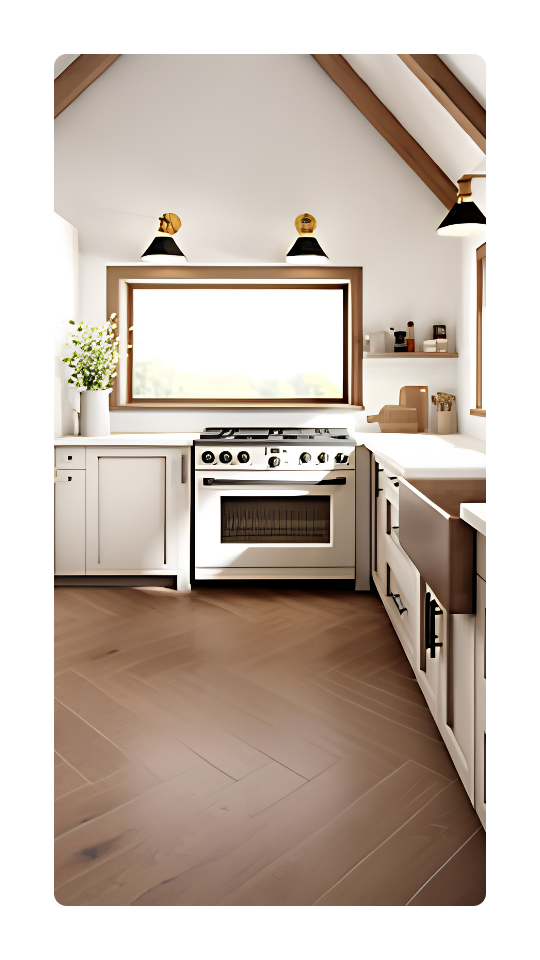
Tile shape and installation pattern matter, too. Rectangular porcelain tiles can be installed in straight, staggered, or herringbone patterns, but not every layout works equally well with every product. Some long rectangular tiles have a slight curvature from manufacturing, which can make a 50% staggered pattern more prone to uneven edges. Depending on the manufacturer’s recommendations, a smaller offset may produce better results.
Does Tile Size Affect Grout Lines?
Yes, and the difference goes beyond appearance. A 24-by-24-inch porcelain tile generally requires fewer grout joints than a 12-by-12-inch ceramic tile across the same floor area. Fewer joints can make cleaning easier, but larger tiles also demand tighter substrate flatness tolerances to minimize lippage, where one tile edge sits higher than the next.
Grout joint width also depends on the tile’s dimensional consistency. Rectified porcelain tiles, which have mechanically finished edges, can often accommodate narrower grout joints than tiles with more variation in size. However, even rectified tiles require grout spacing, and the minimum width must account for manufacturer specifications and installation standards.
For homeowners considering large-format porcelain or patterned ceramic tile flooring in Las Vegas, it’s worth discussing tile dimensions, layout direction, and grout joint width before installation. These decisions influence the finished appearance and may affect the preparation and labor required.
Choosing the Best Grout Color for Porcelain and Ceramic Floor Tiles
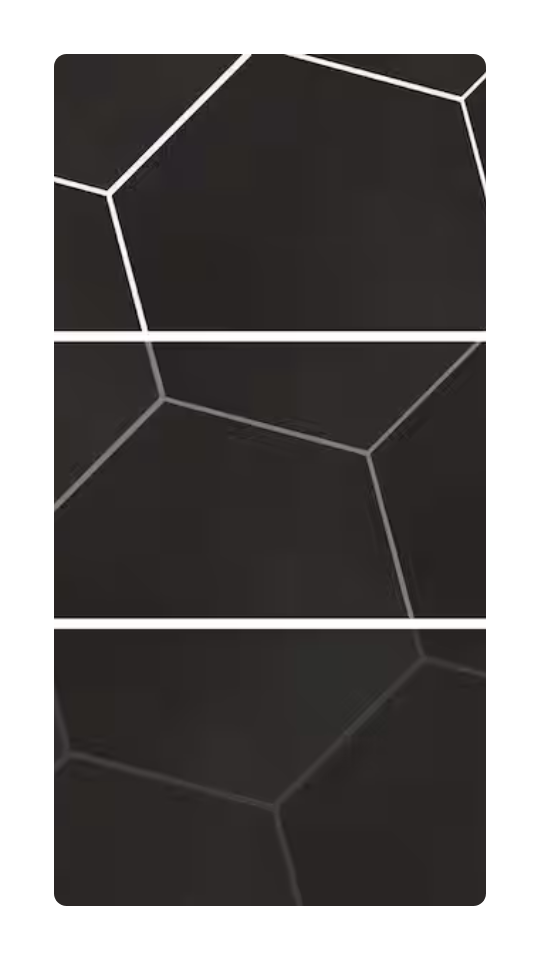
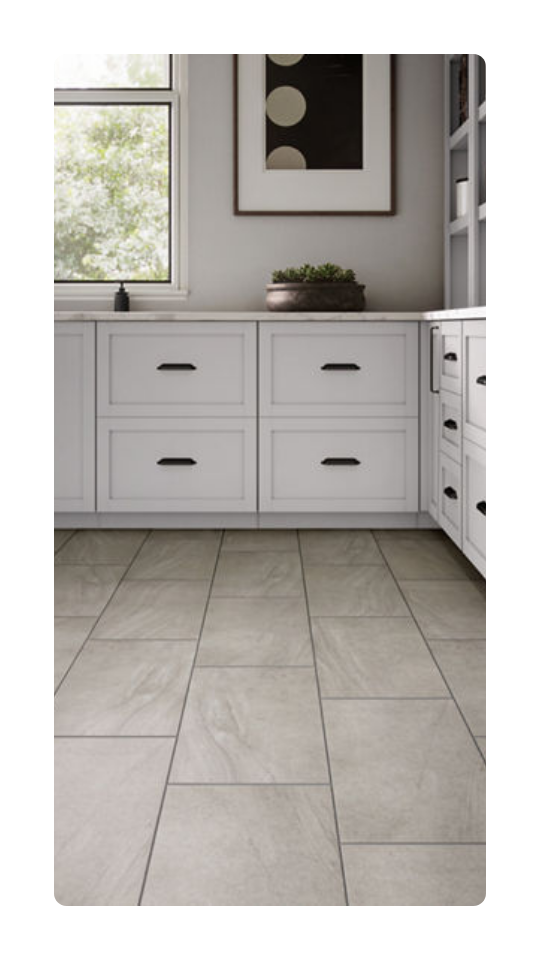
Grout color can dramatically change how tile flooring looks, yet it’s often treated as an afterthought. A grout color that closely matches the tile can create a subtle, continuous appearance. A contrasting grout color emphasizes the shape and pattern of individual tiles.
Neither approach is inherently better. For example, light porcelain tile paired with a similar grout color can make a kitchen or living room feel more visually open. Darker grout against lighter tile creates stronger definition, which can be particularly appealing with patterned ceramic flooring.
However, appearance shouldn’t be your only consideration.
Grout color also influences how noticeable dirt, discoloration, and everyday wear become. Very light grout may show tracked-in dirt more readily, while very dark grout can reveal mineral residue or cleaning-product buildup. For Las Vegas homeowners, a balanced grout color that complements the tile and suits the room’s maintenance needs is often more practical than choosing the lightest or darkest option available.
What's the Best Grout for Kitchen and Bathroom Floor Tiles in Las Vegas?
The best grout depends on the tile, grout joint width, moisture exposure, and how much maintenance you’re comfortable with.
Traditional cement-based grout is commonly used with porcelain and ceramic floor tile. Depending on the formulation, it may benefit from sealing to improve stain resistance.
High-performance cementitious grout can offer improved color consistency and stain resistance compared with some traditional formulations.
Epoxy grout is highly resistant to staining and moisture absorption, making it worth considering for certain kitchens, bathrooms, and other demanding environments. However, it generally costs more and requires installers familiar with its application.
For kitchen tile flooring, stain resistance matters because cooking oils, food spills, and frequent cleaning can affect grout over time.
For bathroom tile flooring, moisture resistance and proper installation are particularly important. Keep in mind that grout alone doesn’t waterproof a bathroom floor. Areas requiring waterproofing need an appropriate system beneath the tile.
The best grout for porcelain floor tiles isn’t necessarily the most expensive option. It’s the one that meets the installation requirements and makes sense for how the room will be used. If you’re still deciding between porcelain and ceramic tile for your home, our guide to the benefits of ceramic tile flooring offers additional insight into its durability, maintenance, and practical advantages to help you compare your options.
How to Get Smooth Tile Flooring Transitions Between Rooms and Sliding Glass Doors
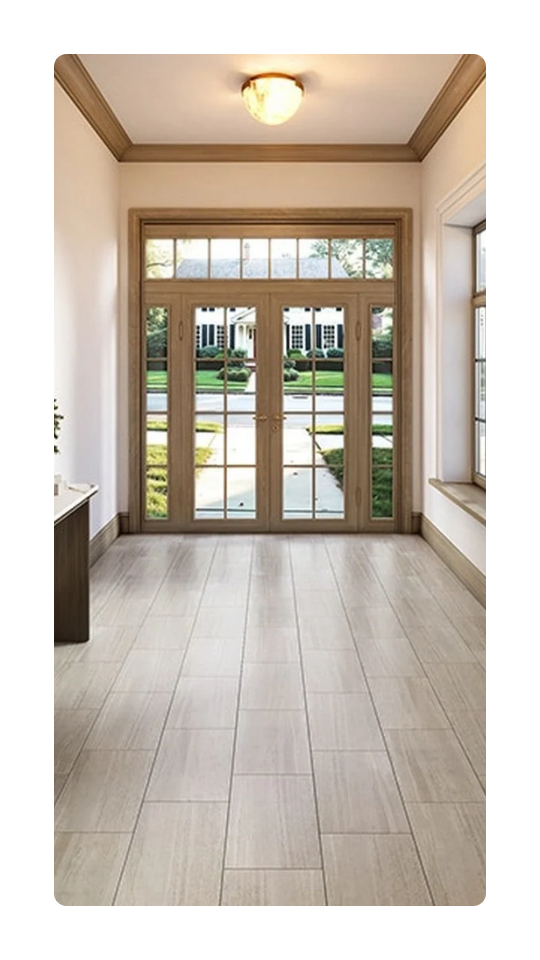
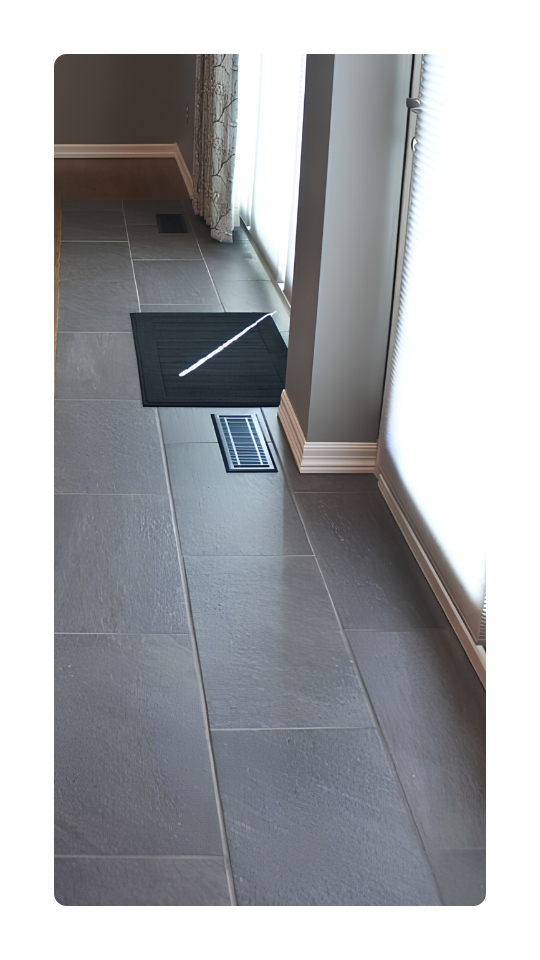
Las Vegas homes often have sliding glass doors connecting indoor living spaces to patios, backyards, and pool areas. When installing porcelain or ceramic tile near these openings, the finished floor height must work with the existing door threshold without interfering with its operation or creating an uncomfortable step.
Where tile meets carpet, luxury vinyl plank, laminate, or hardwood, differences in flooring thickness may require a transition strip or profile. These finishing pieces help protect exposed tile edges, accommodate height differences, and create a safer, more comfortable transition between surfaces.
The type of transition matters, too. Metal profiles can provide a clean, contemporary finish, while coordinating stone or other approved threshold materials may better complement certain tile designs. At exterior doors, installers must also account for required movement joints and avoid interfering with the door’s drainage or weatherproofing.
For homeowners updating multiple rooms, planning these connections before installation helps avoid bulky thresholds, awkward height changes, and mismatched finishes that can detract from otherwise beautiful new floors.
Why Concrete Subfloor Preparation Matters in Las Vegas
One thing many Las Vegas homeowners don’t realize is that concrete can look perfectly fine while still having conditions that affect tile installation. Beyond visible cracks, installers need to consider moisture, surface contaminants, and whether the concrete provides a suitable bond for the materials being used.
Not all concrete cracks require extensive repairs. Here's what to look for:
- Hairline or minor shrinkage cracks: If both sides remain level and the crack is stable, these may be addressed with appropriate preparation or a crack-isolation membrane.
- Wider but stable cracks: These may also be manageable, depending on their width, condition, and the limitations of the repair system.
- Uneven cracks: If one side sits higher than the other, it may indicate vertical movement that requires further evaluation.
- Widening cracks or sinking concrete: These can signal ongoing settlement or structural movement that should be investigated before installing tile.
Moisture is another consideration, even in Las Vegas’s dry climate. Concrete slabs can transmit moisture vapor from the ground, and certain installation materials have specific moisture requirements. Existing adhesives, sealers, or coatings may also interfere with bonding and need to be evaluated before new tile is installed.
If you’re replacing old tile, removing the flooring doesn’t necessarily leave behind a surface that’s ready for installation. Residual mortar, damaged concrete, or previous repairs may require additional work. In some cases, installing new tile over existing tile is possible, but only when the original flooring is firmly bonded, properly prepared, and suitable for the new installation.
Because these conditions aren’t always visible until existing flooring is removed, ask what subfloor preparation is included in your tile installation estimate and how unexpected issues will be handled. Understanding this upfront can help you avoid surprises once the project begins.

One of the Best Things You Can Do? Take the Flooring Sample Home
We can talk about sunlight performance all day, but there’s another reason natural light matters when you’re choosing flooring: It can completely change how the floor looks.
This is something that’s really hard to judge from a computer screen or even under showroom lighting. You may love a flooring sample when you first see it and then bring it into your house and think: “Wait. Why does this look so warm?” Or gray. Or brown. Or lighter than you expected. That’s normal.
The light in your home is different from the light in a showroom. Your cabinets, countertops, paint colors and furniture can also bring out undertones you didn’t notice before. So take the sample home. Put it next to the sliding door. Move it over by the window. Look at it in the morning. Check it again in the afternoon. Then look at it at night with your lights on.
And don’t just hold the sample in your hand. Put it on the floor where it’s actually going to be installed. Our flooring showroom serving Las Vegas offers free flooring samples for exactly this reason. We want you to see what you’re actually choosing in your own home before you commit to an entire room of it.
Where to Shop for Porcelain and Ceramic Tile Flooring in Las Vegas
If you’re comparing porcelain tile flooring, ceramic tile flooring, or professional tile installation in Las Vegas,
choosing a flooring retailer that understands both product selection and installation can make the process easier.
At Expert Flooring Solutions, we carry porcelain and ceramic floor tile from trusted manufacturers, including Daltile, Emser, and Marazzi. Our team can help you compare tile sizes, finishes, grout colors, and layouts based on your home’s design and everyday needs. With a family flooring history dating back to 1934 and more than 35 years serving the Las Vegas Valley, our employee-owned company takes pride in the relationships we’ve built with local homeowners.
Our installations are completed by our own in-house employees, not independent subcontractors.
We also offer complimentary furniture moving before and after installation, removal and hauling away of old flooring, and installation debris cleanup. Every installation is backed by our lifetime labor warranty, covering qualifying workmanship according to its terms.
Consult With a Flooring Expert and Get Free Flooring Samples to Take Home
Expert Flooring Solutions -
Las Vegas
6485 S Rainbow Blvd #100
Las Vegas, NV 89118
Is EFS the Right Flooring Retailer for You?
Whether you’re updating a bathroom, replacing kitchen tile, or planning new flooring throughout your home, we’ll take the time to listen, answer your questions, and help you make informed decisions without unnecessary upselling.
Visit our showroom at 6485 S Rainbow Blvd, Suite 100, Las Vegas, NV 89118, near Sunset Road and Rainbow Boulevard, to explore tile flooring options and take advantage of our free flooring design consultations.
Because great tile flooring isn’t just about what you choose. It’s about how carefully it’s installed.

Discover Other Flooring Guides for Las Vegas Homeowners
We’ve created these flooring blogs to answer the questions homeowners ask us every day. From comparing flooring types to which brands work best for your home’s unique situation, you’ll find practical information to help you make a confident decision before your project begins.